
A ductless heat pump is a heating and cooling system that does not need traditional ductwork. It moves heat instead of creating heat like a furnace, which makes it a practical option for older homes, additions, finished basements, garages, sunrooms, and rooms that never seem to stay comfortable.
For many homeowners in Middlesex County, it can be a smart way to add year-round comfort without opening walls or installing a full duct system.
What Is a Ductless Heat Pump?
A ductless heat pump is an HVAC system that heats and cools specific areas of your home without using air ducts.
You may also hear it called a:
- ductless mini split heat pump
- mini split system
- ductless air source heat pump
- ductless heat pump system
The setup usually has two main parts: an outdoor unit and one or more indoor units. The indoor unit is often mounted on a wall, ceiling, or floor, depending on the layout of the room.
Instead of pushing air through long duct runs, the indoor unit sends conditioned air directly into the space. That is why ductless systems are often used in homes where adding ductwork would be expensive, messy, or simply not practical.
This can be especially helpful in Massachusetts homes with older construction, finished attics, finished basements, home offices, additions, and rooms with uneven temperatures.
What Is a Ductless Heat Pump?
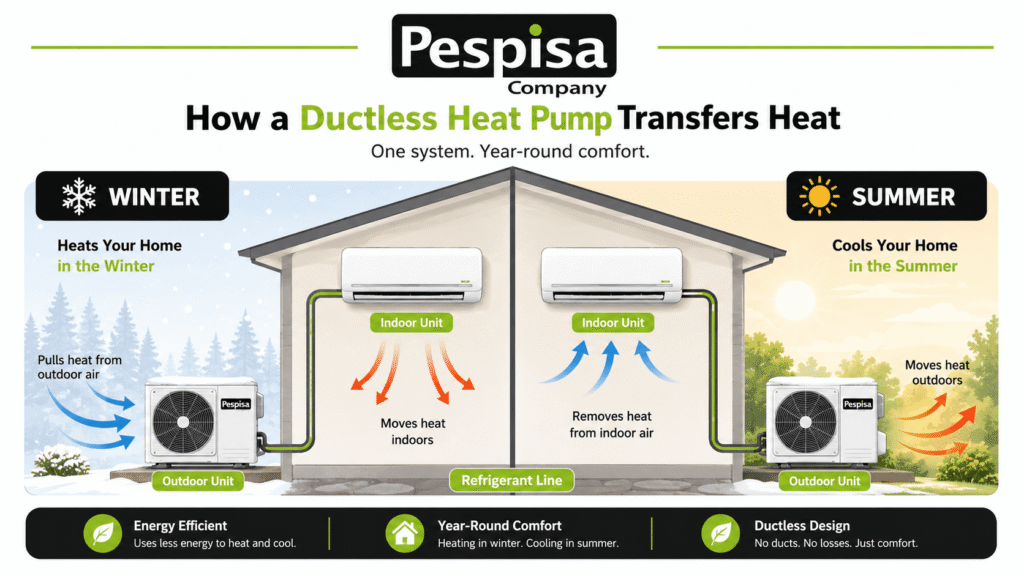
A ductless heat pump works by transferring heat from one place to another.
In the winter, it pulls heat from the outdoor air and moves it inside your home. Yes, even cold outdoor air can still contain usable heat. In the summer, the process reverses. The system pulls heat from inside your home and moves it outdoors, helping the room feel cooler.
That is the simple answer to how does a ductless heat pump work.
It does not burn fuel inside your home like some traditional heating systems. It also does not rely on ductwork to move air from room to room. Instead, refrigerant moves between the outdoor unit and the indoor unit, carrying heat in or out depending on the season.
This is also why ductless systems can both heat and cool. One system can help with winter comfort and summer cooling.
If you are comparing home comfort options, Pespisa’s ductless heat pumps page is a helpful place to see how these systems may fit different rooms and home layouts.
What Are Ductless Heat Pumps Best Used For?
Ductless heat pumps are useful when a home needs better comfort in specific areas.
They are commonly used for:
- Older homes without existing ductwork
- Finished basements
- Finished attics
- Garages or workshops
- Home additions
- Sunrooms
- Rooms that are always too hot or too cold
- Downsizing heating and cooling in specific zones
- Supplemental comfort alongside an existing heating system
For example, maybe your living room feels fine, but the upstairs bedroom is always freezing in February. Or maybe your finished basement gets muggy in summer and chilly in winter.
A ductless mini split heat pump can target that space directly instead of forcing your main system to work harder for the whole house.
Why Homeowners Like Ductless Systems
One major reason homeowners choose ductless systems is control.
With a traditional central system, the whole home often runs on one thermostat. That can be frustrating when different rooms have different needs.
With ductless systems, each indoor unit can usually be controlled separately. This gives you more flexibility. You can make one room warmer without overheating the rest of the house.
Another benefit is that ductless systems avoid energy loss from ductwork. In some homes, ducts can leak air or run through unconditioned spaces. That means some of the heated or cooled air never reaches the room where you need it.
Ductless systems deliver air directly into the space, which can help improve comfort and efficiency when the system is properly sized and installed.
Is a Ductless Heat Pump the Same as Central Air?
No, not exactly.
Central air conditioning usually uses one indoor air handler and a duct system to cool the whole home. A ductless heat pump uses one outdoor unit connected to one or more indoor units without traditional ducts.
Both can cool your home, but they work differently.
A ductless system may be a better fit when you only need to condition certain spaces or when your home does not already have ductwork. Central air may be a better option when the home already has ducts in good condition and the goal is whole-home cooling.
For homeowners comparing cooling options, Pespisa also provides air conditioning services for homes that need AC repair, replacement, or new system planning.
Can a Ductless Heat Pump Heat a Whole Home?
Sometimes, yes. But it depends on the home.
A ductless system can heat and cool multiple rooms if it is properly designed with the right number of indoor units. This is called a multi-zone system.
However, whole-home comfort depends on several factors:
- Size of the home
- Insulation quality
- Room layout
- Ceiling height
- Window quality
- Existing heating system
- Number and placement of indoor units
- Massachusetts winter conditions
This is where proper planning matters. A ductless system that is too small may struggle. A system that is too large may cycle poorly and fail to control comfort well.
That is why it helps to work with an HVAC professional who can look at the home, not just the square footage.
If you are reviewing broader heating options, Pespisa’s heating services can help you compare ductless systems with other solutions like boilers, furnaces, and ducted heat pumps.
What Makes Ductless Heat Pumps Useful in Middlesex County Homes?
Many homes in Middlesex County were built before modern HVAC systems became standard. Some have older ductwork. Some have no ducts at all. Others have additions that were never properly connected to the main heating or cooling system.
That is where ductless systems can make a big difference.
They allow homeowners to improve comfort without a large ductwork project. They can also help solve problem areas where the main system does not perform well.
Common examples include:
- A second-floor bedroom that overheats in summer
- A finished basement that feels damp and cold
- A home office above a garage
- A family room addition with poor airflow
- An older home with radiator heat but no central AC
In these situations, a ductless air source heat pump can give the space its own comfort control.
Does a Ductless Heat Pump Need Maintenance?
Yes. Like any heating and cooling system, a ductless heat pump needs regular maintenance.
Homeowners can usually clean or check filters, but the system should also be inspected by a professional. Maintenance may include checking refrigerant levels, cleaning coils, inspecting electrical components, checking drainage, testing performance, and making sure the system is running safely.
Regular heating maintenance can help reduce avoidable breakdowns, weak airflow, unusual noises, and higher energy bills.
If the system is already struggling to heat or cool, it may need more than a basic tune-up. In that case, heating repairs and maintenance may be the better next step.
Is a Ductless Heat Pump Right for Your Home?
A ductless heat pump may be a good fit if your home has comfort issues in specific rooms, lacks ductwork, or needs a flexible heating and cooling option.
It may also be worth considering if you are planning a renovation, finishing a basement, converting a garage, or adding a room to your home.
The best way to know is to have the space reviewed by an HVAC professional. Room size, insulation, layout, and your current heating system all matter.
Pespisa Company works with homeowners throughout Middlesex County and can help you understand whether a ductless system makes sense for your home. To talk through your options, you can contact Pespisa Company and schedule a consultation.
Conclusion: What Is a Ductless Heat Pump?
A ductless heat pump is a heating and cooling system that works without traditional ductwork. It transfers heat instead of generating it, giving homeowners a flexible way to improve comfort in specific rooms or areas of the home.
For many Middlesex County homes, especially older homes or spaces without ducts, it can be a practical option for year-round heating and cooling.
Frequently Asked Questions about Ductless Heat Pumps
What are ductless heat pumps?
Ductless heat pumps are heating and cooling systems that use an outdoor unit and one or more indoor units. They do not require traditional ductwork, which makes them useful for older homes, additions, basements, and rooms with poor airflow.
How does a ductless heat pump work in winter?
In winter, a ductless heat pump pulls heat from the outdoor air and moves it indoors. Even when the air feels cold, the system can still transfer available heat into the home.
Can a ductless mini split heat pump cool a room too?
Yes. A ductless mini split heat pump can heat and cool. In summer, it removes heat from the indoor air and sends it outside, helping the room feel cooler.
Is a ductless air source heat pump good for older homes?
It can be. A ductless air source heat pump is often a good option for older homes because it does not require new ductwork. It can help improve comfort in rooms that are hard to heat or cool.
Do ductless heat pumps need professional installation?
Yes. Proper installation matters. The system needs to be sized correctly, placed properly, and installed according to the home’s layout and comfort needs. Poor installation can lead to weak performance, higher energy use, and repair issues later.